
Europe’s energy transition demands more than a strong roll out of renewables. Smarter, safer, and truly sovereign storage proves just as crucial. That is why SPRINT project partners are developing next-generation quasi-solid-state sodium-ion batteries tailored for stationary energy storage, with an aim of commercialising our innovative solutions.
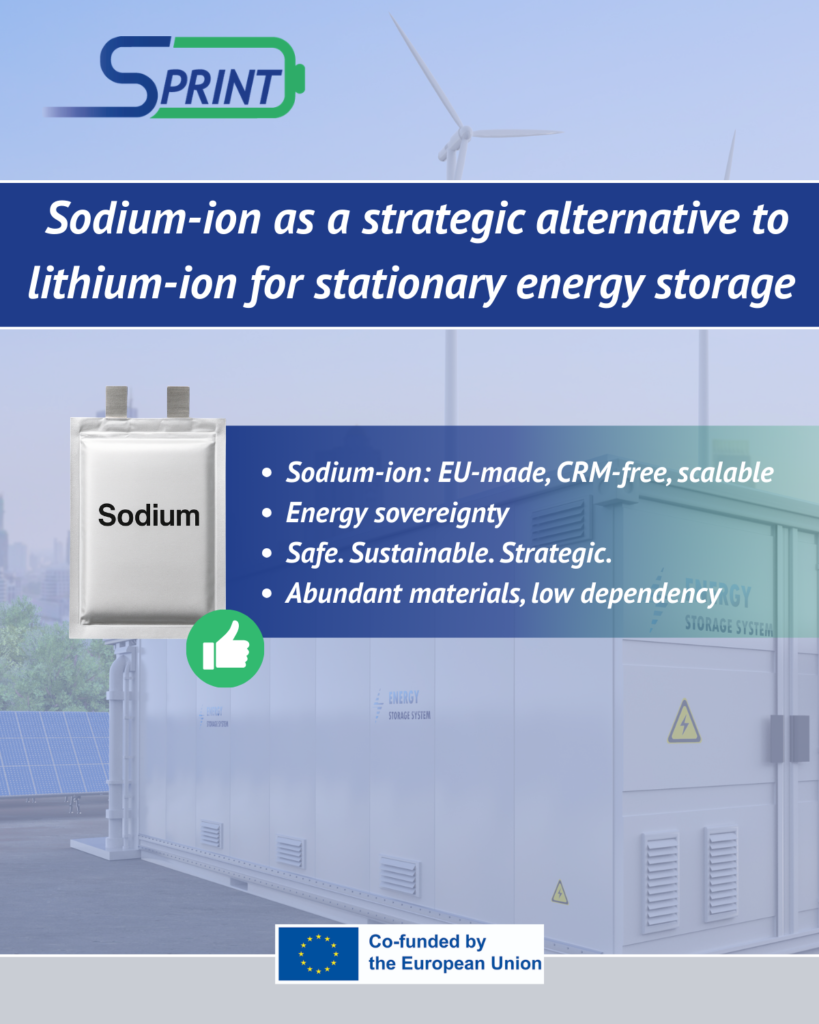
Sodium-ion technology as a strategic alternative to Lithium-ion batteries for stationary energy storage
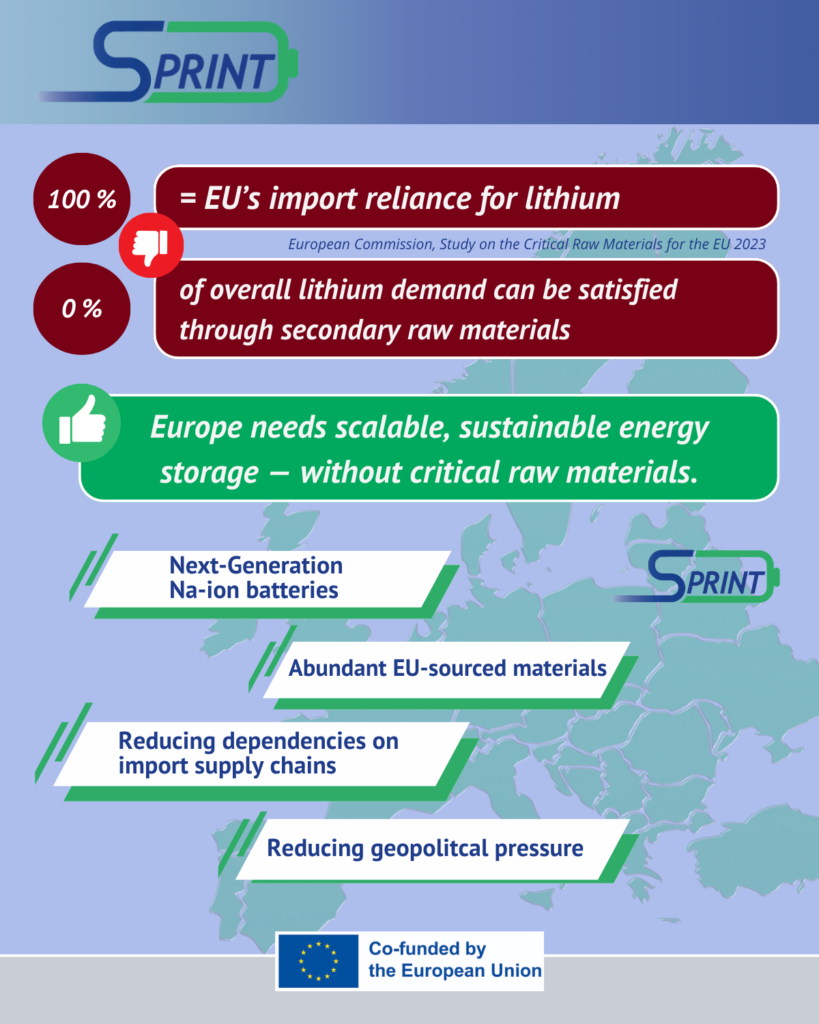
More than ever, today’s Europe needs scalable, sustainable energy storage without relying on critical raw materials imported from third countries. Lithium-ion batteries are dominating current markets and come with growing concerns such as high costs, dependence on scarce minerals, supply chains jeopardised by the geopolitical situation.
SPRINT is developing next-generation sodium-ion batteries built on abundant, EU-sourced elements. In particular, it builds on optimised NFPP cathode (Na₂FeP₂O₇ cathode) materials, hard-carbon anodes derived from North-European forests residues, and innovative quasi-solid polymer electrolytes that are solvent-free and non-flammable. By replacing conventional liquid electrolytes with safer polymer-based alternatives, SPRINT’s technology is not only more stable but also leak-free. This innovation constitutes a key breakthrough for large-scale deployment.
By combining safety, cost-efficiency (€0.04/kWh/cycle), and long lifetime (exceeding 5,000 cycles), SPRINT paves the way for sovereign and resilient stationary energy storage solutions.
Renewable energy and grid balancing
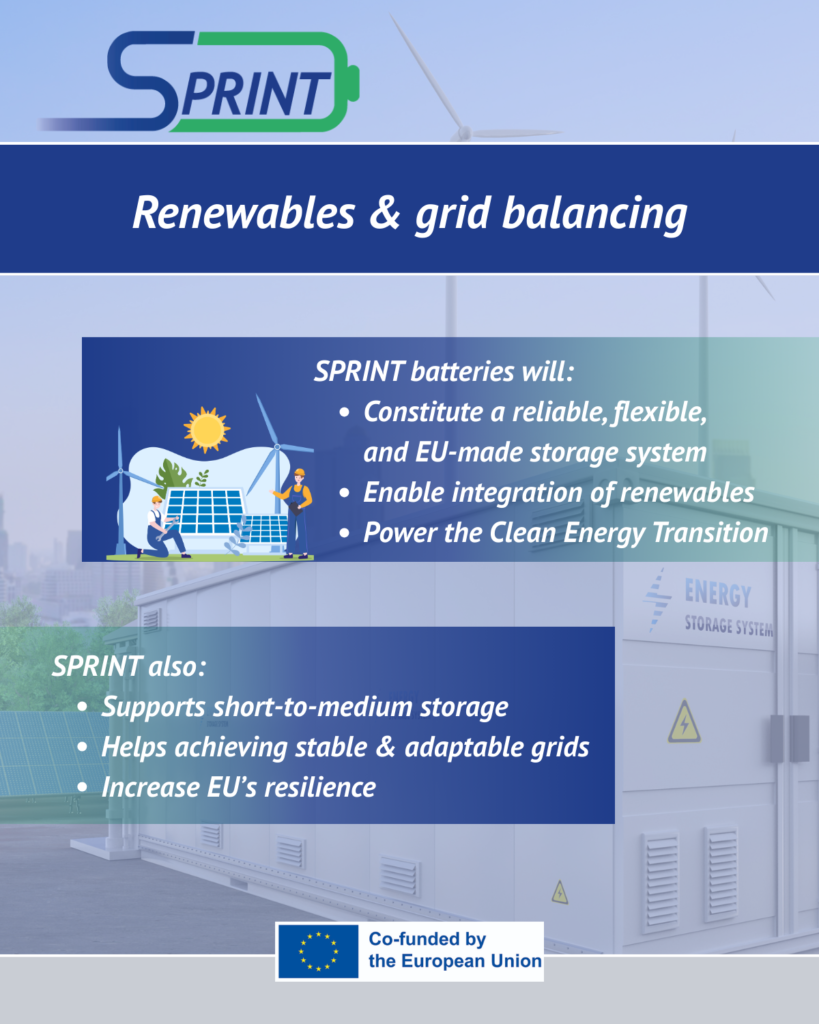
Renewable energy is unpredictable by nature. Energy storage solutions need to bring stability. SPRINT aims to respond to the surging demand for sustainable and cost-effective storage solutions.
With sodium-ion batteries, SPRINT enables reliable day-night balancing for solar and wind energy. The technology supports short to medium storage durations which enables smoothing out the variability of renewables and keeps the grids stable.
To validate this in practice, SPRINT is setting up two real-world demonstration sites. In Austria, the batteries will be tested for grid balancing services, more specifically on storing and releasing electricity from public power grids in order to maintain stability. In Lithuania, the focus will shift to residential photovoltaic storage and increasing grid capacity for EV charging. Beyond the European continent, SPRINT is also engaging international stakeholders in Morocco, Tunisia, Kenya, and Sierra Leone, exploring how this technology can contribute to energy access in emerging markets. These demonstrations are a critical step toward showing that sodium-ion is not just a laboratory concept, but it constitutes a commercially ready, grid-relevant solution helping Europe achieve stable and resilient energy infrastructure powered by renewables.
Sodium-ion technologies and sustainability
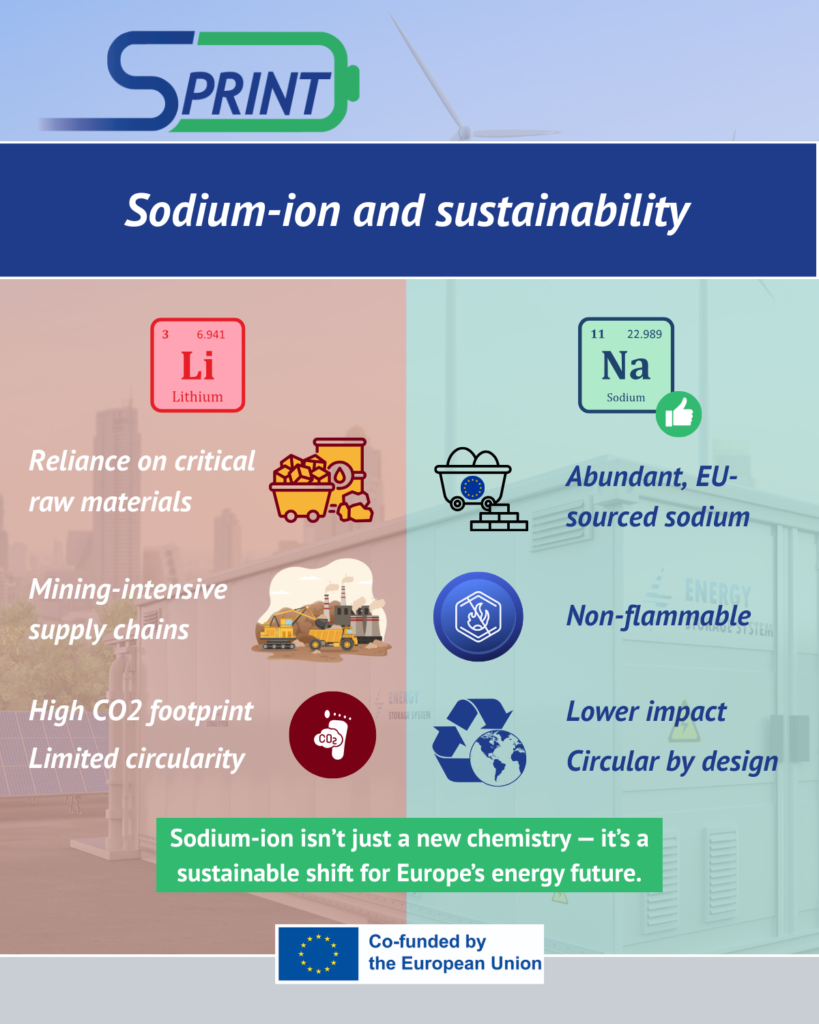
Today’s batteries come with hidden sustainability costs. Critical raw materials, mining-intensive supply chains, safety constraints, and limited circularity remain major barriers to a truly green energy transition.
Sodium-ion batteries offer a different pathway. As a component of common salt (NaCl), sodium is one of the most abundant elements on Earth. It is cheap, widely available, and free from the geopolitical dependencies that, for instance, affect lithium. SPRINT’s batteries are built on a foundation of using non-toxic, EU-sourced materials that reduce environmental impact at every stage of the value chain.
The project also places circularity and manufacturability at its core. With industrial partners like Comau developing scalable production processes and integrating SPRINT technology into existing battery manufacturing lines, the path from lab to market is clearly mapped. An Exploitation Board is being established to accelerate commercialisation, ensuring that SPRINT’s innovations reach end-users quickly and contribute to Europe’s growing battery industry.
Built on abundant materials and backed by a strong consortium, SPRINT is strengthening Europe’s industrial autonomy. We are delivering safer battery innovation with a lower environmental footprint and a stronger strategic position on the global stage.
SPRINT’s sodium-ion batteries represent a strategic answer to Europe’s energy sovereignty challenges. By combining abundant, EU-sourced materials, enhanced safety, and proven cost-efficiency, SPRINT delivers a credible, scalable alternative to lithium-ion technology. With real-world demonstrations underway and a clear path to commercialisation, SPRINT is positioning European technologies at the forefront of next-generation stationary storage. Sodium-ion technologies contribute to a cleaner, more resilient energy future on foundations that are safe, circular, and truly independent.